Honoring Shab-e Yalda and the Winter Solstice ❄️ 🌞
Honoring Shab-e Yalda and the Winter Solstice
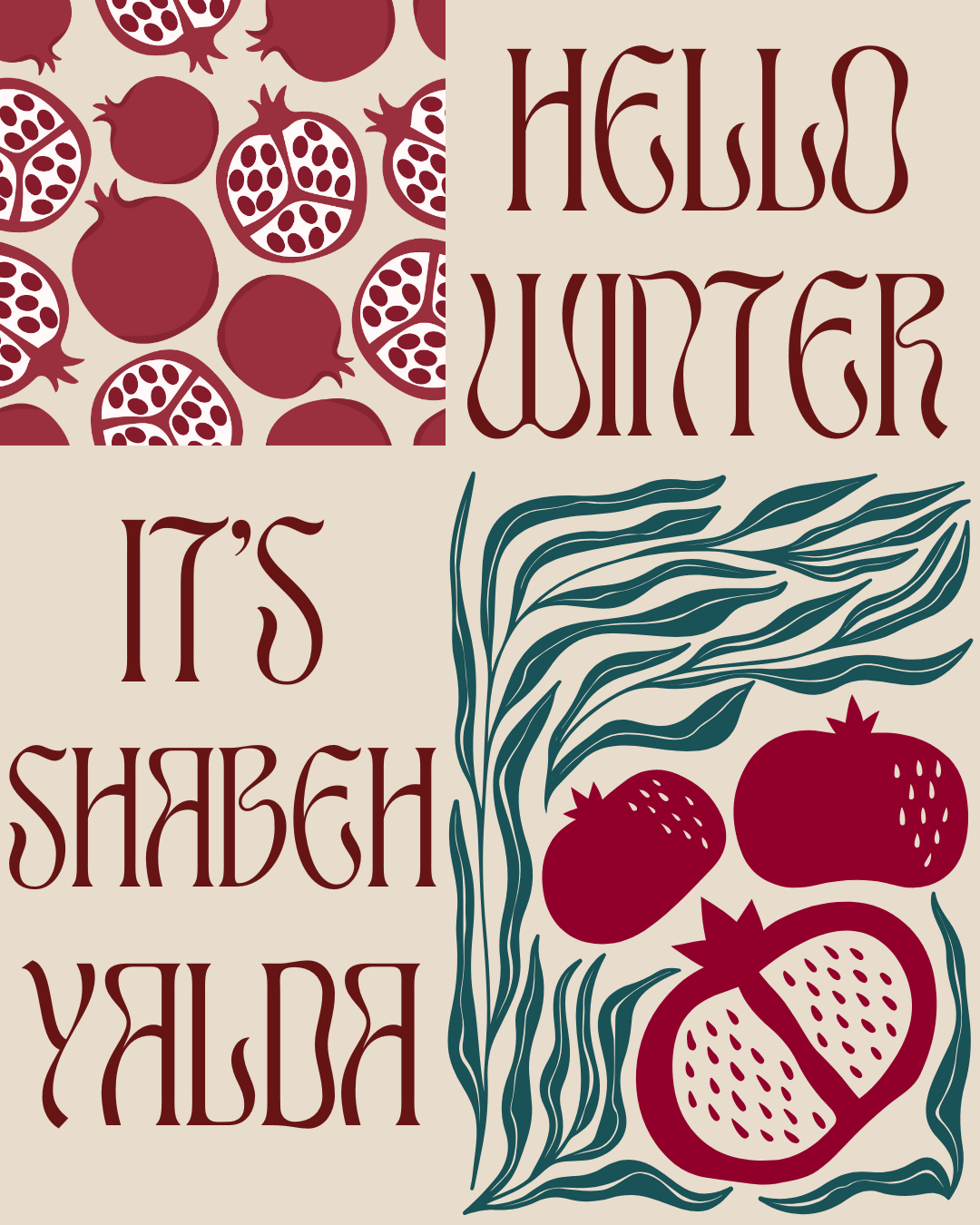
Today marks the Winter Solstice, the shortest day and longest night of the year in the northern hemisphere. In my Persian culture, this night holds deep significance and is called Shab-e Yalda. According to tradition, the longest night is believed to be a time when evil forces gain strength, so friends and family come together to protect one another and celebrate. The dawn that follows symbolizes the triumph of Mithra, the Sun god, over darkness, a reminder of the inevitable return of light.
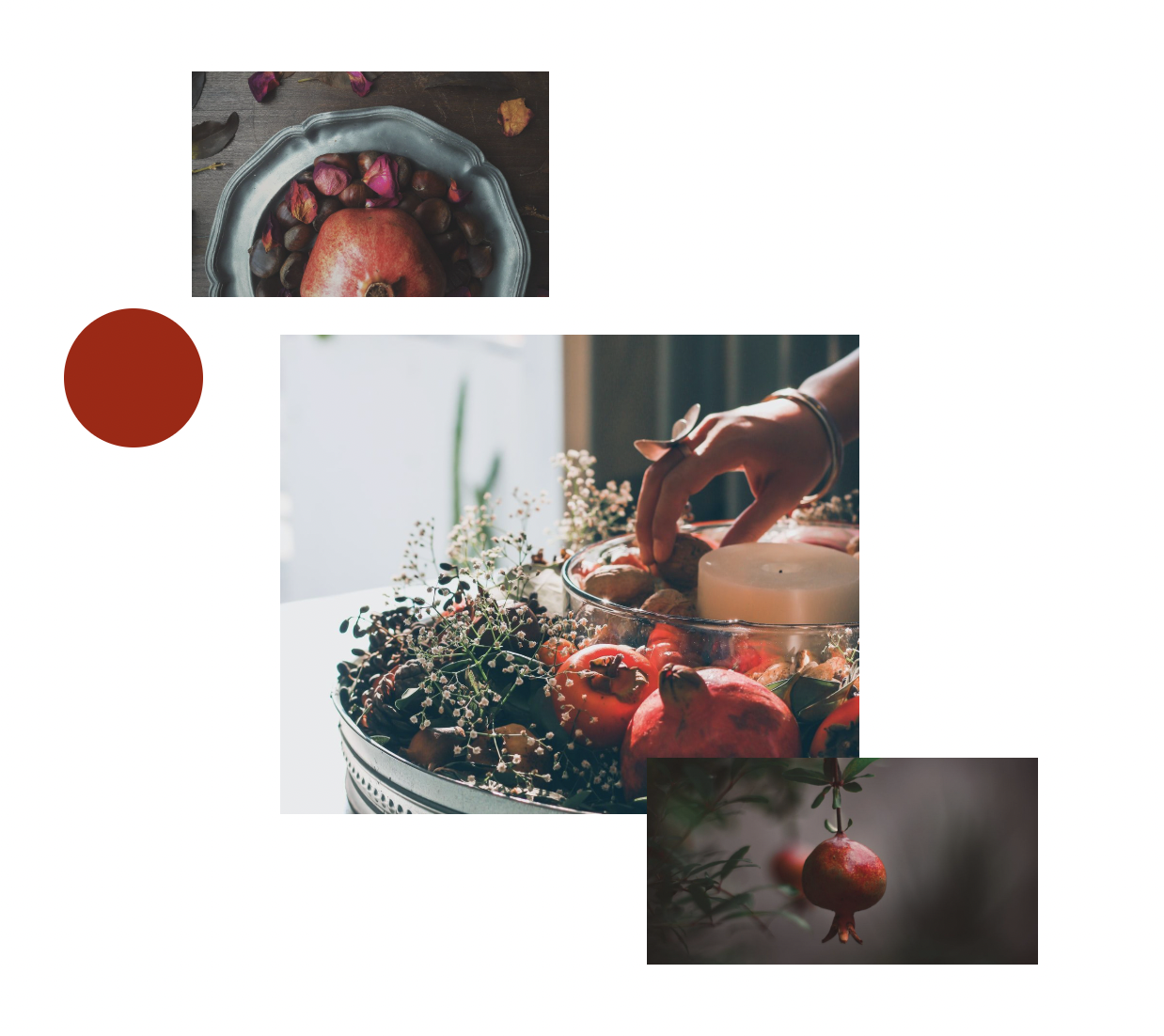
As a child, I loved the Winter Solstice because it meant staying up late and celebrating alongside the adults. My grandmother, and later my mother, would host vibrant gatherings filled with warmth and tradition. Family and friends would come together to read the poetry of Hafez, enjoy pomegranates from their abundant spread, and dance and laugh into the early hours. The pomegranate, with its jewel-like seeds, is a symbol of abundance, renewal, and fertility in Persian culture, a perfect reflection of this night’s themes of rebirth and the triumph of light over darkness.
Each of us would make a wish and “randomly” select a page from Hafez’s Divan, a collection of his 14th-century poetry often compared to Shakespeare in its depth and significance. The chosen poem was believed to hold the answer to our wish, and the elders would recite its meaning. As a six-year-old, I didn’t understand the words, but the night always felt magical and deeply mystical.
Even as an adult, and after the passing of all of my grandparents and living far from my parents, I’ve continued to honor this tradition in my own way. Since I can’t read Hafez myself, I’ve embraced tarot as a way to tap into the same energy of guidance and connection on Shab-e Yalda. I always celebrate the night with loved ones, sharing a big bowl of pomegranate seeds as a symbol of abundance and renewal.
In recent years, I’ve come to understand the spiritual significance of the Winter Solstice beyond its cultural roots. It’s more than just the longest night. It’s a profound time of rebirth and renewal. This moment marks the beginning of a new cycle of time and holds an energy that is even more transformative than the arrival of the Gregorian calendar’s New Year.
Why does this matter to all of us?
The Winter Solstice is a potent time for transformation. It invites us to reflect on the past year, honor where we’ve been, and release old patterns. As we let go, we create space to dream and set clear intentions for what we wish to bring into the next cycle. It’s a powerful moment to align with the triumph of light over darkness, both within ourselves and in the world around us.
How can you honor this special time?
Take time to complete the cycle of this year. Ask yourself:
What do I want to release?
What lessons am I grateful for?
What do I want to bring into this new cycle?
Engage in a ritual that feels meaningful to you.
Light a candle to symbolize the return of light, meditate, journal, or simply hold space to connect with your intentions. You might also incorporate pomegranates into your ritual, whether by eating them or placing them on your altar. Their vibrant seeds can serve as a reminder of abundance, hope, and the beauty of starting anew.
Today, I can feel my ancestors, especially my grandmothers, surrounding me, present, electric, and filled with hope for the good things ahead. Their energy reminds me that this time is sacred, not just for me, but for all of us.
If you’re feeling called to deepen your connection to yourself and your personal path of transformation, consider joining our heart-centered community, House 11, in the new year. Together, we explore these cycles, share openly, and support each other in ways that are brave, unique, and integrated. Whether you’re looking for ritual practices, live group coaching, or personal guidance, this membership is a beautiful way to honor your journey.